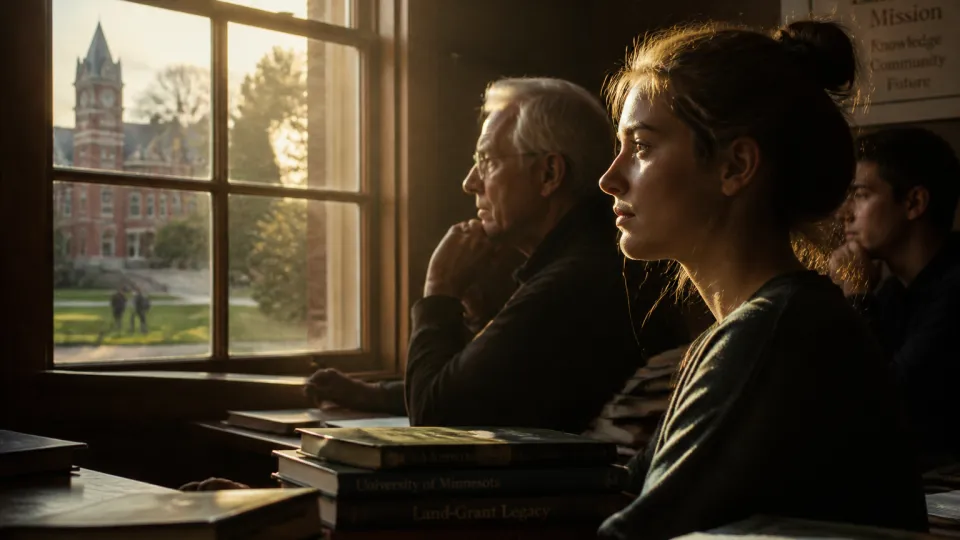
The photograph hangs in the hallway of a Brandon school: a black-and-white portrait of a classroom packed with children, their heads bowed over slates and arithmetic, a wood stove at the back. It is both archival artifact and living memory. For much of the 20th century, classrooms across Westman were where the region forged its future — not only by teaching reading, writing, and sums, but by knitting together immigrants, farmers, Indigenous families, and newcomers into networks of mutual support.
This is a story of continuity and change. Early on, learning in the prairies was local in the most literal sense. One-room schoolhouses dotted the landscape outside Brandon and in communities such as Virden, Killarney, Neepawa and Carberry. Teachers were community members as much as educators: they baked for school functions, sat on municipal councils, and were the first to organize relief in hard winters. Those schools taught the basics, but they also rehearsed civic responsibility and a sense of shared fate that rural life demanded.
As agricultural mechanization and population shifts accelerated, school consolidation reshaped daily life. Buses lengthened school days and centralized resources, and by mid-century institutions such as Brandon University and Assiniboine Community College became anchors for the region. Those colleges expanded access — providing teacher training, vocational programs, and a pathway to professions that had been otherwise out of reach for many local young people. The presence of post-secondary campuses in Brandon meant that higher education was no longer a distant city dream but a tangible option for Westman families.
Yet the history is not untroubled. For Indigenous communities across the region, formal schooling has been entangled with colonial policies that severed language and culture. In recent decades, local schools and post-secondary institutions have begun to reckon with that legacy. Place-based curricula, Indigenous language programs, and partnerships with nearby First Nations and Métis communities are slowly reshaping what education means in Westman. This is not simply about new classes; it is about restoring the trust that was broken and recognizing education as a site of cultural renewal.
The human dimensions of these shifts are best seen in individual stories. A second-generation farmer who became the first in his family to graduate from university remembers how his high school shop teacher in Brandon encouraged him to consider engineering; a former teacher in a one-room school recalls walking children home through blizzard, carrying a student on her shoulders. An immigrant mother who arrived in Brandon in the 1990s sent her children to evening language classes while she learned workplace skills at Assiniboine Community College. These are ordinary acts that, together, transformed life chances and the region's economic prospects.
Education in Westman has also been adaptive. When economic tides changed — grain prices fluctuated, small shops closed and new employers arrived — schools responded. Vocational training oriented to local needs, adult learning programs, and community-college partnerships helped workers pivot into health care, renewable energy, or trades. During the pandemic, classrooms and community centres became testbeds for hybrid learning, stretching broadband capacity and prompting local leaders to rethink how geography should not determine access to knowledge.
That pragmatic adaptability is changing the region's civic fabric. Schools now increasingly serve as community hubs: offering childcare, literacy programs for newcomers, and cultural events that bring together elders and students. These multifunctional spaces are not merely convenient; they embody a philosophy of education as public infrastructure, equally vital as roads or water systems to the life of towns like Brandon and the surrounding rural municipalities.
Looking ahead, the most consequential challenge will be equity. Demographic shifts, climate uncertainties that affect agricultural livelihoods, and the ongoing need for reconciliation with Indigenous communities demand education strategies that are flexible and justice-centered. Investments in digital access are necessary but insufficient without curricula that center local knowledge and languages. Teacher recruitment must be intentional about reflecting the communities schools serve. And post-secondary institutions will need to deepen apprenticeship pipelines and community-based learning so that degrees translate into local opportunity.
In the end, Westman reminds us that schooling is only partly about curriculum. It is a civic art practiced in lecture halls, gymnasiums, basements and around kitchen tables. The region's past shows how education made communities resilient; its present asks how those lessons can be adapted to a future defined by mobility, cultural reclamation, and ecological change. If the portrait in the hallway still matters, it is because new portraits are being made — of students learning Indigenous languages, of adults earning second-career certificates, of communities insisting that every child belongs. That ongoing work, quietly persistent, is the most meaningful legacy of classrooms on the prairies.