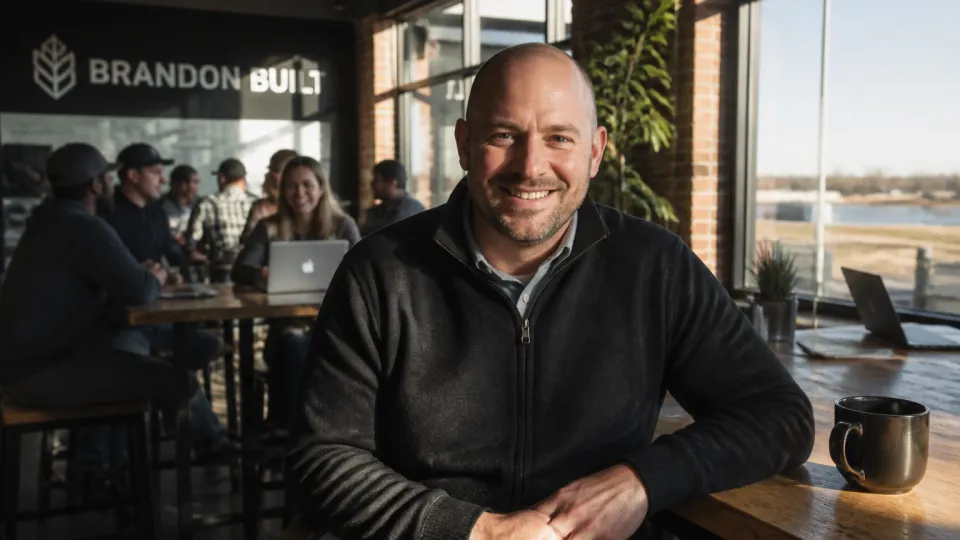
The first time I meet Maya Desjardins she is carrying a crate of routers down a narrow stairwell off Rosser Avenue. It is an ordinary Tuesday in Brandon: the sun slants across the Assiniboine River, a courier truck hums past the bakery, and in the brick storefront that once sold only coffee and pie, a folding table holds soldering irons and bundles of ethernet cable. Maya moves with a kind of purposeful calm, like someone threading together separate threads until they make a stronger cloth.
Maya arrived in Brandon seven years ago, not as a tech evangelist but as a small-business owner. Her café—what people jokingly call a hybrid third place—became a listening post. Farmers stopped in for espresso and asked about online grain prices; a retired nurse asked for help with video calls to her granddaughter; a hardware store owner from Virden wondered why his inventory app kept losing sales reports. One by one, these disparate problems converged into a single, stubborn question: how do small towns use in ways that actually help people who are already stretched thin?
Her answer was never flashy. It was practical and iterative. She started by opening her doors before dawn to teach a free monthly class in basic digital skills. Then she layered services onto the café: a secure corner for telehealth appointments, a shared Point-of-Sale system small retailers could rent by the week, a broadband mesh node on the roof to extend Wi-Fi to the sidewalk. When the province funded last-mile infrastructure, Maya rallied local businesses into a co-operative that applied for grants together, negotiating better pricing than any of them could have on their own.
"People think technology is a bolt-on: you buy a gadget and everything improves," she told me over coffee. "But it’s the systems we create—schedules, trust, and follow-through—that make tech useful here." Her voice is plain and decisive; she measures success by whether someone’s life is easier tomorrow than it was yesterday.
Those small, steady changes add up. Take Virden Hardware, a family-run store that had long relied on phone orders and handwritten ledgers. After an afternoon with Maya’s team, they migrated to a cloud inventory system. Within months the owner reported fewer stockouts and fewer evening calls from customers frustrated by empty shelves. "We stopped guessing what folks needed," the owner said. "Now we spend less time fixing our records and more time talking to people in the shop." That human return—the reclaimed time, the improved conversation—recurs across every success Maya points to.
Maya’s work spread beyond retail. In collaboration with a grain co-op outside Rivers, she piloted low-cost moisture sensors in storage bins. The sensors, paired with a simple dashboard, gave farmers an early warning of rot risk and saved a stretch of weather-marred crops. A nurse in Carberry began using one of Maya’s teleconferencing booths to perform remote check-ins for seniors who could no longer drive. For a youth group in Neepawa, the café became an incubator: kids learned basic web development and now run three local e-commerce storefronts that keep craft money circulating inside the region.
The human element is central. When broadband reaches a village, the headline often reads only about download speeds. Maya insists on asking what people will do with that capacity. "Connectivity without context is noise," she said. "We focus on the use cases that keep people housed, fed, and connected to care and work." Her approach has a social architecture: informal mentoring, a rotating schedule of volunteer tech tutors drawn from Brandon University and Assiniboine College, and evenings when seniors and students swap stories over Wi-Fi and tea.
There are tensions. Not every initiative scales easily. Some towns resist change; others lack reliable cell towers to bridge cellular and wired networks. Funding cycles are short, and a pilot can die when a grant runs out. Maya mitigates this by building revenue models into projects: a modest subscription for data dashboards, sliding fees for training, shared equipment rental. That pragmatism protects the social gains when philanthropy ebbs.
Looking ahead, Maya imagines a region where technology is a tool for reciprocity rather than extraction. She speaks of microgrids that could keep freezers running during storms, of community-owned data platforms that return marketing insights to farmers instead of to distant corporations, and of apprenticeship pathways so young people can stay in Westman doing work they enjoy. "I don’t want to see us import solutions that don’t fit our rhythms," she said. "We need tech that respects our seasons—the planting, the harvest, the long winter nights—and helps us live better through them."
Back on Rosser Avenue the crate of routers is empty now, and the café hums: a student edits video beside a retired teacher, a farmer skypes his supplier from a corner table, and a teenager shows an elder how to zoom in on a photograph. The story of technology in Westman, as Maya tells it, is not about outpacing cities but about out-caring them: using modest tools to protect livelihoods, deepen relationships, and reimagine what rural prosperity can mean in the years to come.
In an era when talk of often centers on scale and novelty, the work in Brandon offers a quieter model. It asks policymakers and funders to take seriously the patient labor of teaching, of fixing, of listening. It suggests that if small towns are to thrive, they will do so by weaving technology into the social fabric, one router, one lesson, one conversation at a time.