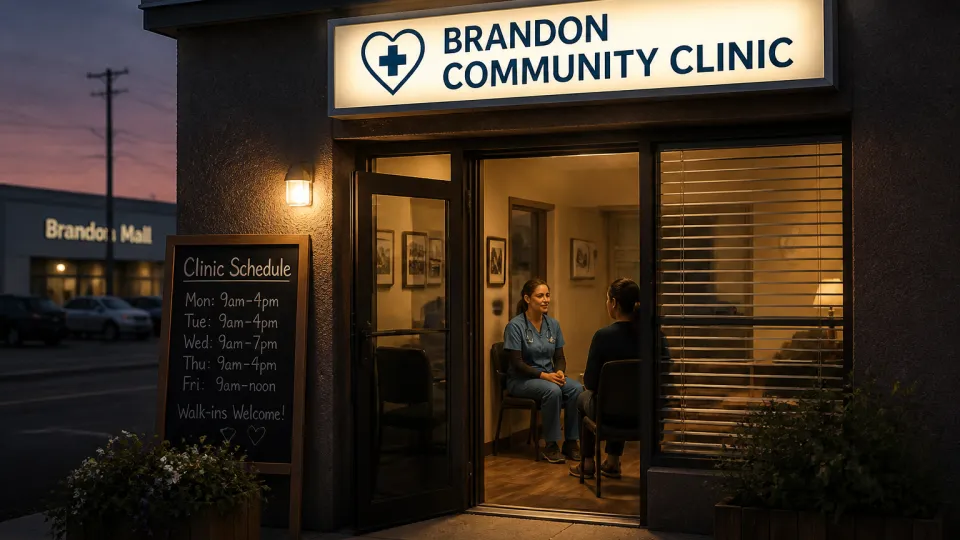
On a cold Thursday evening in downtown Brandon, the modest community clinic next to a thrift store looked nothing like a hospital. Warm light pooled through frosted windows; a chalkboard listed drop-in hours for diabetes education and mental-health check-ins. Inside, a nurse practitioner laughed with a young man who had come in for a first appointment he said he had been postponing for months.
This scene — small, local, resolutely practical — is the everyday face of a quiet reinvention unfolding across Westman. Faced with workforce shortages, long emergency-room waits and the particular vulnerability of rural residents, local leaders and frontline clinicians have stitched together a network of initiatives that are changing how care is found, delivered and felt.
The architecture of this reinvention is familiar but repurposed: community paramedicine teams, mobile clinics, expanded telehealth kiosks, Indigenous-led outreach, and partnerships with colleges and volunteer groups. What sets the Westman effort apart is its patient-centered improvisation — a willingness to locate services where people are and to let communities help shape them.
Community paramedics, once focused primarily on emergency response, now make scheduled home visits to monitor chronic conditions and prevent avoidable hospital trips. A paramedic who spoke on background described the difference: “We’re doing wound care, blood-pressure checks, medication reconciliation — things that keep people at home and out of the ER.” Those visits often reveal social needs — food insecurity, unstable housing — that are then routed to local supports, creating a bridge between clinical care and social services.
Telehealth has been another lever. Where driving two hours to see a specialist was once a fact of life, video consultations and remote monitoring have kept follow-up appointments local. In smaller towns like Neepawa and Virden, kiosks in health centers let patients connect face-to-face with urban specialists while nurses and allied health workers provide hands-on support. For many elders, being able to attend a specialist appointment without leaving town has been more than convenient; it has prevented the cascading costs and stress of travel.
Indigenous-led approaches, increasingly central to Westman’s picture, are restoring trust where it had frayed. Local Indigenous health workers and community organizations have led mobile clinics and culturally safe outreach, especially in remote settlements. One organizer, speaking in a community meeting, said the priority was straightforward: “We get care to people in a way that respects who they are, and that matters as much as the treatment.” Embedding cultural safety into primary care, rather than asking patients to adapt to a system that has not served them well, has shifted engagement and outcomes.
Education and workforce development are the practical backbone. Brandon’s training partners — colleges and community programs — have focused on pipelines for rural nursing, paramedicine and mental-health practice. Students are sent to placements in small towns where they often stay, reducing leakage of talent to larger centres. Meanwhile, cross-training — nurses learning basic mental-health counselling, paramedics delivering primary-care follow-ups — has increased flexibility without diluting professional standards.
The human cost of these changes is visible. Take the case of a woman in her sixties who relied on a community paramedic for monthly medication reviews after a stroke. “I don’t have to worry about the ride,” she said. “They come to me, and it feels like someone is watching out.” Or the 17-year-old in Brandon who accessed evening mental-health drop-ins at the clinic near the thrift store; for him, the service meant the difference between continuing school and dropping out.
Results are not uniform and challenges remain. Staffing shortages persist, provincial funding models sometimes lag behind the hybrid services emerging on the ground, and digital access is uneven for households without reliable internet. Some initiatives depend on short-term grants or the good will of volunteers, which raises questions about .
Yet there is momentum. Local leaders are increasingly advocating for policy adjustments that recognize community-delivered care: stable funding for paramedicine programs, integrated electronic records to share information across sites, and investment in rural broadband. Equally important is a shift in mindset among health administrators toward flexibility — valuing local as part of the health system rather than an adjunct to it.
The work in Westman is, above all, practical and humane. It is not the grand reform of a single act but the cumulative effect of small redesigns: a paramedic visit that prevents a hospital stay, a kiosk that keeps an elder connected to a specialist, a culturally safe clinic that reengages a family. Together, these pieces are proving that in rural Manitoba, care is best rebuilt where people live.
For a region that has often been written off as too remote for efficient healthcare delivery, Westman’s community-based experiments suggest a different lesson: the future of rural health will not bend toward a single blueprint. It will be a patchwork — stubbornly place-based, human-centered and, if supported, increasingly resilient.
As winter thaws and local clinics plan for the next year, leaders here are asking a simple policy question: can the province back the ingenuity it has encouraged? The answer will determine whether the warmth in Brandon’s small clinic windows remains a temporary glow or becomes the new, accessible face of care across Westman.