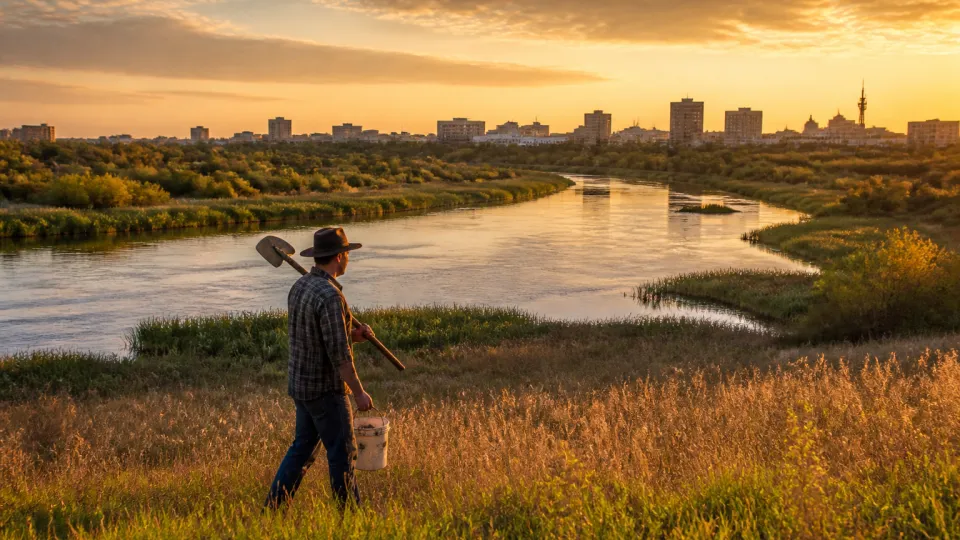
There is a particular light in spring that finds the Assiniboine River before it reaches Brandon: flat, hard to the eye, then uncanny as it refracts off a ribbon of thawing water. For more than a century, that ribbon stitched the livelihoods, anxieties and triumphs of Westman together. It is also the place where the story of environmental reckoning in southwestern Manitoba has been written—often in measures small enough to be missed by regional headlines, and consequential enough to alter how a community survives and thrives.
The region’s environmental history is marked by two antagonists: a human impulse to intensify and the prairie’s stubborn fragility. In the early 20th century, mechanization and market demand pushed settlers to till and plant at unprecedented scales. The Dust Bowl of the 1930s and subsequent decades of soil loss and episodic flooding exposed a painful truth: productivity without ecological stewardship is brittle. But over the last half-century, farmers, municipal planners, Indigenous partners and conservationists in Westman began reversing that narrative through incremental, pragmatic experiments—no single policy or hero, but a patchwork of choices that, together, changed the landscape.
"We used to plow until the land was paper-thin," said a third-generation farmer from the Brandon hinterland, recalling fields his grandfather farmed. "Then you start losing the topsoil, and you can see the past in the gullies. You either change, or you don't have a future here." His choice—shifting to no-till, planting cover crops, and setting aside corners of fields as pollinator habitat—mirrors a broader regional shift. As grain prices and climate pressures fluctuated through the 1990s and 2000s, many area farmers adopted regenerative practices that reduced erosion, improved soil carbon, and buffered crops against drought and heavy rains.
Wetlands—long dismissed as wastelands in the rush to expand arable acres—became an axis of restoration. Oak Lake Marsh and numerous smaller sloughs south and west of Brandon were recognized not only for migratory birds but for their flood attenuation and groundwater recharge. Local non-profits and municipal governments began investing in wetland restoration and buffer zones, understanding that wetlands are infrastructure as crucial as culverts and dikes. These projects changed the conversation from "protecting nature somewhere else" to "managing water and life for our towns and farms."
The human dimension of that change matters. In Brandon, community gardens and schoolyard native-plant projects have created new sites of intergenerational learning. A conservation biologist with a regional NGO described the classroom value: "When kids plant prairie grasses and see water stay where it should, it rewrites their relationship to the land. They stop thinking of conservation as an abstract virtue—it's a tool." Local Indigenous communities, too, have been central partners, contributing traditional knowledge about seasonal cycles and land care that complements scientific restoration techniques. These cooperative efforts have yielded practical benefits: fewer costly emergency flood interventions, deeper soil profiles on working farms, and modest but measurable increases in biodiversity.
The economics are pragmatic rather than romantic. Reduced fuel and labor costs from conservation tillage, small grants for riparian buffer establishment, and partnerships that unlock provincial funding have made a tool for resilience. Brandon’s municipal planners, understanding the inevitability of climate variability, now integrate green infrastructure into development: permeable surfaces, expanded urban tree canopy, and protections for riverbanks informed by historical floodplain mapping. The result is less spectacle than slow, cumulative risk reduction.
Yet the challenges ahead are real. Climate models predict more intense precipitation events and more pronounced dry spells on the Canadian Prairies. Regional solutions will require scaling what has worked locally: broader adoption of regenerative agriculture, more intentional wetland credits and markets, and deeper, formalized partnerships with Indigenous nations for land stewardship. Crucially, the political work—aligning provincial incentives with long-term ecological outcomes—remains unfinished.
The Westman story matters beyond its fields and marshes because it reframes sustainability as municipal policy, agricultural practice and lived experience. It is not a single project or proclamation but a series of decisions that tether economic life to ecological function. As one longtime resident put it, "We aren't saving the prairie for some distant poster; we're making our town livable for the next winter, the next flood, the next kid who wants to farm."
If the last century taught Westman anything, it is that environmental stewardship is not a cost center but a form of neighborhood insurance—slow, sometimes subtle, but profoundly effective when neighbors, scientists and governments pull in the same direction. The challenge now is to institutionalize those neighborhood practices at scale, so that the Assiniboine and the communities along it keep offering that light in spring: steady, defiant and hard-earned.