It is not a spectacle but the latest chapter in a quieter transformation. For years, residents of Westman have contended with thinly stretched primary care, long drives to specialist appointments, and a hospital system that absorbs problems whose solutions are often community based. The response has not been a single grand plan from a ministry but a weaving together of small, practical programs: community paramedicine teams, mobile clinics, telehealth hubs, volunteer transport cooperatives and home-based supports run in partnership with local organizations.
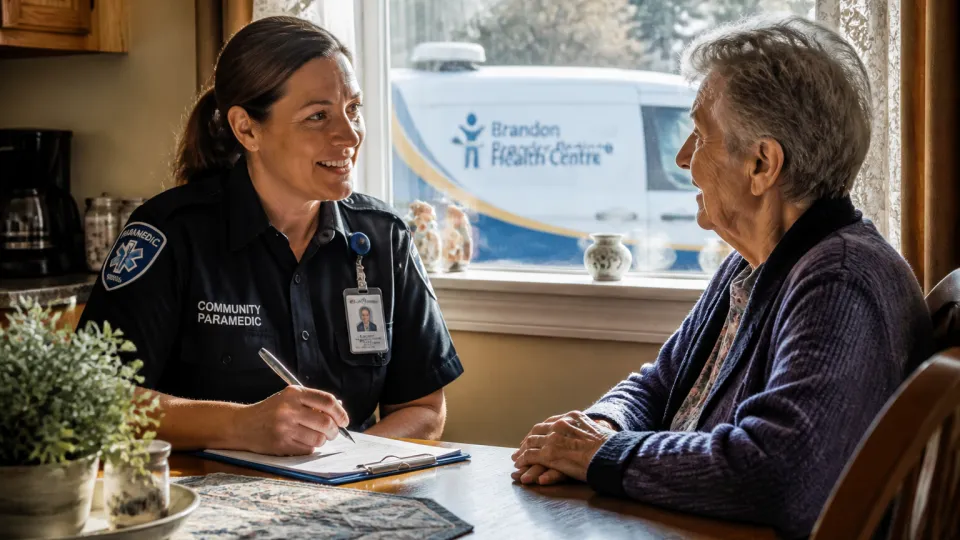
The story begins with people like 'Martha', 78, who lives alone on the edge of a small town west of Brandon. She keeps a careful list of medications and a stack of appointment cards in a kitchen drawer, but it was a fall last winter that crystallized the fragile link between independence and care. A community paramedic arrived within hours, not merely to triage her injury but to sit at her table, sort medications, and set up a schedule for follow-up visits. 'I felt like someone finally listened to what I needed to keep living here,' she said. Her name has been changed to protect her privacy.
Community paramedicine is one of the most visible innovations in Westman. These teams, often staffed by paramedics trained to deliver primary-care services, make scheduled home visits to monitor chronic conditions, provide wound care, and help manage medications. The intervention reduces unnecessary emergency calls and hospital readmissions while reconnecting isolated patients to primary-care teams. In Brandon and surrounding municipalities, paramedics collaborate with family physicians, home-care nurses, and mental health workers to make care portable.
Telemedicine has provided another practical bridge. Patients in communities an hour or more from the Regional Health Centre can now consult with specialists via secure video links in local clinics. But alone is not the solution; these virtual consultations succeed when paired with on-the-ground support. At a rural clinic outside Minnedosa, a nurse guides a patient through a virtual cardiology consult, ensuring blood pressure readings are accurate and questions are framed for the specialist. It is a small choreography that depends on investment in local staff and reliable broadband — an infrastructure challenge in parts of Westman that community leaders continue to press for.
Mental health services have also shifted from crisis reaction to outreach. A mental health outreach team partners with schools, Indigenous friendship centres, and community groups to offer early intervention and walk-in supports. The team’s outreach coordinator, who asked that her name not be used, points out that many young people first seek help for sleep issues or stress; brief interventions and warm referrals often prevent escalation. 'We meet people where they are,' she said. 'Sometimes that means a school gym, sometimes a kitchen table.'
Volunteer networks form the quiet scaffolding for many initiatives. Volunteer drivers ferry seniors to appointments, hospice volunteers provide companionship for those approaching the end of life, and community health navigators help families understand complex billing and referral pathways. These are not charity gestures alone but acts of system repair: they reduce missed appointments, build trust, and make formal services more accessible.
None of these efforts are without strain. Workforce shortages — particularly in family medicine and mental health — remain a constant concern. Funding is often project-based and short-term, making long-range planning difficult. And there is an ongoing need to strengthen relationships with Indigenous communities in Westman, recognizing distinct needs and culturally rooted approaches to healing.
Yet the impact is tangible. Patients who would otherwise endure long waits now receive regular check-ins. Hospital teams report fewer readmissions for preventable complications. Parents describe knowing where to turn when a child needs help out of hours. For clinicians, the reward is not simply numbers but connection: the chance to follow a patient’s journey from hospital bed to kitchen table, to see interventions translate into everyday relief.
Looking ahead, local leaders speak of scaling what works rather than reinventing it. That means sustained provincial investment in community-led programs, targeted recruitment and training that draws on local talent, and partnerships that center cultural safety and Indigenous leadership. It means expanding telehealth infrastructure while maintaining the human supports that make virtual care effective.
The quiet revolution in Westman does not promise to erase all rural healthcare disparities overnight. But its value is in a pragmatic humility: listening to what neighbours actually need, building flexible teams that can cross institutional boundaries, and trusting communities to be partners rather than mere recipients. In the lulls between emergency calls and clinic hours, that trust is converting goodwill into a resilient architecture of care — one home visit, one teleconsultation, and one volunteer drive at a time.
As Martha sips tea in her kitchen, now with a routine of visits and a sense of safety, the case for community-centred care feels less like an experiment and more like a pragmatic blueprint. For Westman, the future of healthcare may be less about big buildings than about making the services people need arrive where they live, in forms that respect dignity and continuity. That work, quietly and insistently, is already underway.