On a late October morning in Brandon, a woman in a blue coat stood outside a coffee shop scrolling through an app that plotted soil sampling results against a satellite image of her family’s field. Across the street a teenager uploaded a short film to a streaming platform, while inside the clinic a nurse prepared a video link for an elderly patient in Carberry who could not travel for a follow‑up. These everyday gestures—that a smartphone, a fiber line and a municipal network could make possible—capture a quiet revolution across Westman.
The arc of adoption here has been neither linear nor inevitable. For decades, arrived in rhythms: new machinery at harvest, a radio with a stronger signal, a cell tower on a high ridge. But since the early 2000s, three converging forces—broadband, cheap satellite data and more powerful, user‑friendly software—have remade how small towns meet the necessities of life: planting, learning, caring for elders and running businesses.
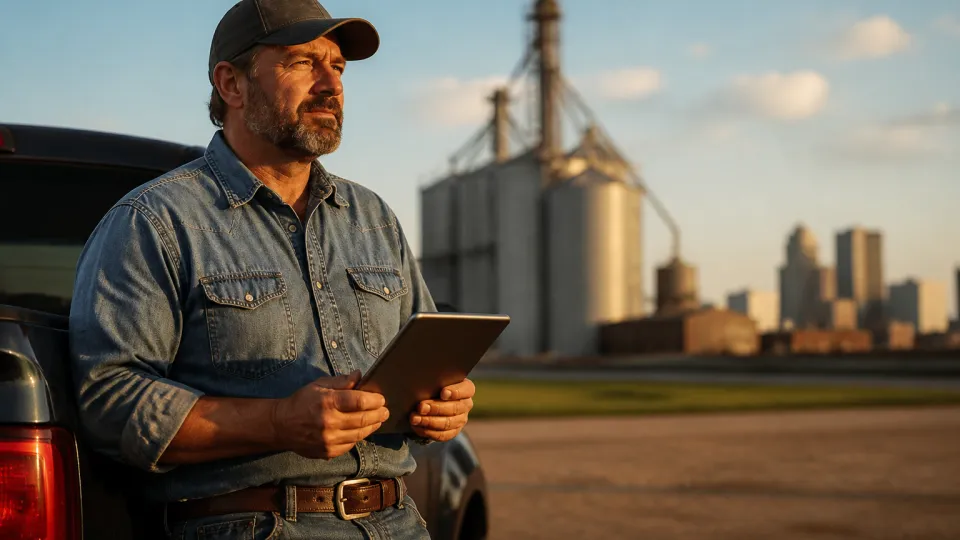
Consider farming, still the cultural and economic backbone of much of the region. Precision agriculture is not wallpaper for glossy magazines; it is a ledger of survival. In Neepawa and surrounding RMs, farmers use RTK GPS guidance to steer combines within centimetres of accuracy, cutting overlap, fuel and time. Sensors measure moisture and nutrient levels; apps translate that data into decisions at seeding time. One farmer described the change bluntly: he used to “guess by sight.” Now he trusts layers of data that keep margins viable when commodity prices wobble.
That marginal gain has human consequences. Fewer hours in the cab mean more time for family and boards. Higher efficiency allows younger adults to remain on the farm or to start agritech businesses in town. But those gains also expose inequities: older operators who never learned digital tools, or properties outside cellular coverage where updates arrive by memory stick.
Healthcare has followed a similar pattern of pragmatic adoption. Prairie Mountain Health’s rollout of telehealth clinics and virtual consults has not been a glamourous innovation; it has been a solution to staff shortages and long drives. For a patient with limited mobility in Souris, a virtual follow‑up means continuity of care; for a family juggling work and childcare in Brandon, it avoids a day off work and a round trip. Nurses and family physicians report that telemedicine deepens access but does not replace the need for in‑person trust. As one clinician put it:
Telehealth extends a hand over distances—it doesn’t substitute the hands that examine and hold.
Brandon University and local schools have also become hubs for digital life. When the pandemic pushed classes online, the community’s libraries and university computer labs became essential infrastructure for students who lacked reliable home internet. That emergency pivot revealed a longer truth: institutions in small towns often serve as the translators and trainers of new technology. Digital literacy workshops—offered by the public library or a volunteer from an agricultural co‑op—are as crucial as fiber lines.
Local businesses tell a parallel story. A bakery in downtown Brandon now ships artisanal bread across Manitoba after building an online storefront; a mechanic in Virden diagnoses engine codes from afar, ordering parts that arrive the next day. Yet small business owners describe adoption as iterative, constrained by time and by the constant learning curve that new platforms impose.
Community responses to those constraints are as revealing as the technology itself. Where private providers leave gaps, municipal partnerships, cooperatives and volunteer groups have stepped in—fundraising for tower projects, organizing digital navigators to help seniors, and lobbying for better rural broadband funding. These civic strategies highlight a persistent truth: technology is social, not just technical. Its benefits accrue when communities build the conditions to use it meaningfully.
Looking forward, two challenges will shape the next decade in Westman. First is equity: closing last‑mile connectivity gaps and investing in lifelong digital education so that adoption is broad, not patchy. Second is purpose: directing emerging tools—AI analytics for crop forecasting, remote monitoring for chronic disease—toward local priorities rather than treating towns as testing grounds for distant firms.
This is a transition that asks not only for faster lines and newer devices, but for patience, governance and imagination. When a teenager in Brandon uploads a short film, or when a farmer in Neepawa trusts a yield forecast from satellite data, they enact a modest, cumulative change in what it means to live in a small town. The best part of that change is not the technology itself but what it enables—stronger social ties, more resilient livelihoods, and the capacity to decide the town’s future.
As Westman towns embrace the next wave of tools, the question is not whether they will change—but how those changes will be governed, taught and shared. The last mile remains a civic problem, and the solution will be as much about community work as it is about cables and satellites. In the end, technology becomes a lifeline only when a community knows how to hold it together.