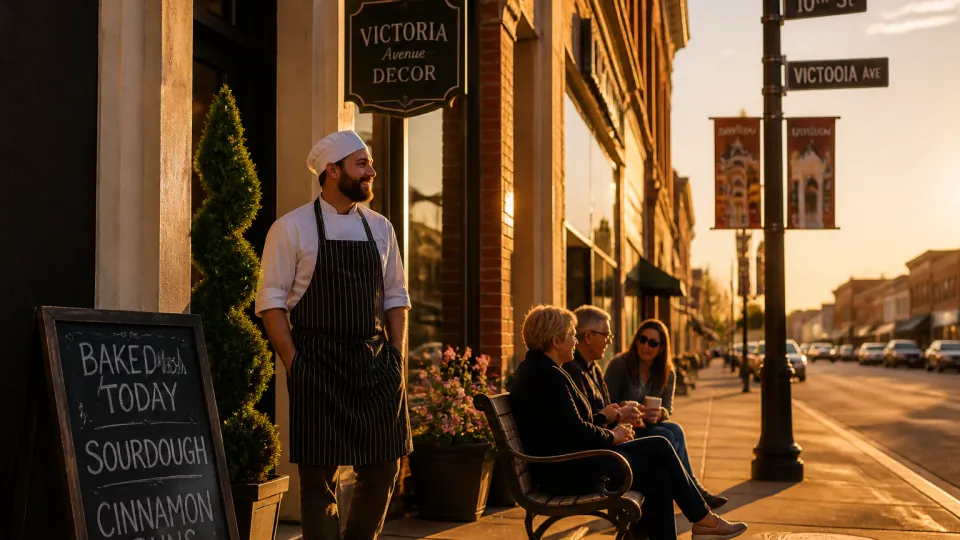
Victoria Avenue awakens slowly on a late-spring morning: a delivery truck idles, a coffee grinder hums behind a storefront window, and a hand-painted sign leans against a lamppost announcing a weekend market. The scene is intimate and ordinary — until you notice the network underneath it. The baker who sources flour from a neighbour’s mill; the tech-driven equipment shared between family farms; the newcomer who opened a repair shop after apprenticing with a carpenter down the road. Across Westman, looks less like Silicon Valley lightning and more like a human ecosystem of mutual reliance.
In downtown Brandon and towns like Neepawa, Souris and Virden, small businesses are doing something deceptively difficult: they are building economies that hold people in place. Take Prairie Oven Bakery, founded five years ago by Ana Torres, who arrived in the region as an immigrant and found her first employment in a grocery store. "I learned how people feed each other here," she says. "So I wanted my bakery to do more than sell bread — to give people work, to use local grain and to be a place where stories are told." Ana’s bakery now supplies two cafés, employs six people with flexible schedules, and runs a weekly baking class for newcomers learning English.
Not every business is artisanal; some are quietly technical and equally transformative. Blue Sky Ag, started by Jared Thomas, began as a side project calibrating soil sensors for his father’s farm. Today the company provides precision-soil mapping to dozens of producers across the region, helping reduce fertilizer use and increase yields. Jared's solution is built not in isolation but through conversations at kitchen tables, at co-op meetings, and in shared shop spaces where farmers and technicians learn from one another.
These ventures are anchored by relationships. Municipal grants and local credit unions provide capital that traditional banks hesitate to offer. Informal mentorship — retired tradespeople taking on apprentices, restaurant owners sharing supplier contacts — lubricates growth in ways grant spreadsheets can’t capture. Brandon University, local chambers of commerce, and groups host workshops on bookkeeping, digital marketing and e-commerce, helping entrepreneurs translate local know-how into scalable operations.
Yet constraints are unavoidable. Broadband gaps, a shortage of skilled labour, and rising input costs complicate growth. "When I post a job, I sometimes get three applicants — not because there's no talent, but because young people leave for larger centres," says Maya Singh, who runs a social enterprise employing youth to restore thrifted furniture. Climate variability also compresses profit margins for those tied to the land, and regulatory complexity can be overwhelming for first-time founders.
What counters these headwinds is an ethic older than any business plan: reciprocity. In towns where success is visible and personal, customers are more likely to patronize a shop because it employs neighbours, sponsors a hockey team or buys grain from a local farmer. That reciprocity is measurable in ways that matter — lower vacancy rates on main streets, increased volunteerism, and a stronger safety net for people navigating illness or job loss.
There are also emerging models that point to the next chapter. Shared-equipment hubs allow makers to access CNC routers, kilns, and packaging lines without prohibitive capital costs. Mobile businesses — from veterinary clinics to bike repair vans — expand service footprints across municipalities, connecting isolated residents to entrepreneurship without demanding urban migration. Cross-community partnerships are starting to form, with neighbouring towns coordinating festivals, tourism routes and procurement to achieve scale while preserving local flavor.
The human element persists in the small decisions: a landlord who offers reduced rent through winter, a buyer who commits to a year-round contract, a group of retired engineers who advise an ag-tech start-up over coffee. Those interactions stitch together risk and trust.
If Westman’s entrepreneurial resurgence is to endure, it will need policies that speak to its particularities: patient capital tailored to seasonal cash flow, investments in rural broadband, and incentives for apprenticeship and mentorship that privilege learning on the job. Above all, success will depend on valuing forms of growth that are social as much as they are financial.
"We’re not trying to be somewhere else," Ana says, watching customers gather at a bench outside her bakery. "We’re trying to make this place work better for the people already here." That modest ambition — of keeping roots and opening doors at once — is the region’s quiet revolution. It’s a form of entrepreneurship born from prairie weather and neighbourly resolve, one that reimagines prosperity as a shared, place-based project rather than an individual sprint. For Westman’s communities, that may be the most sustainable business model of all.