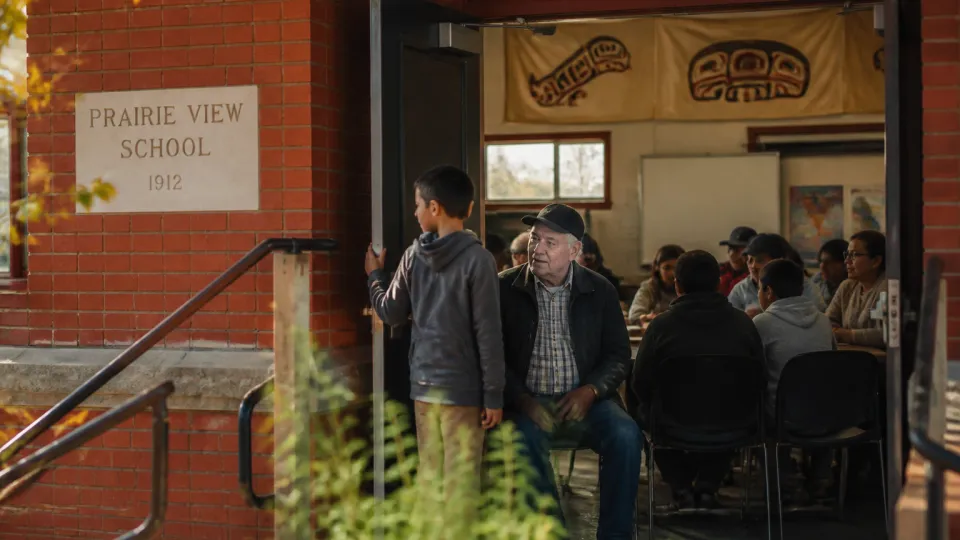
On a low September morning in a Westman town, a red-brick schoolhouse still throws long shadows across the prairie. It is quieter now than it was in the era of coal stoves and strap-bound slates, but the building’s face—its tall windows and the faint outline of an old bell—keeps the imprint of lives shaped within. Schools in Brandon and the surrounding rural municipalities have rarely been merely sites of instruction. They were meeting halls, orphanages in winter, performance stages for harvest recitals, and the place where newcomers learned English and neighbours learned to trust one another.
The story of education here is a layered one: immigrant parents who kept heritage languages alive while demanding new opportunities for their children; rural families who fought school consolidations because town buses meant fewer daily crossings of the yard where children once played; Indigenous communities who endured the brutal history of federal residential schools and now seek to rebuild language and pedagogy on their terms. These narratives intersect in classrooms, in basements where evening adult-education classes still convene, and in the university lecture halls that now draw students back to the region.
In the early twentieth century, one-room schools dotted Westman like fence posts. A single teacher might instruct children aged five to sixteen, teaching arithmetic in the morning, and reading and sewing in the afternoon. The intimacy of such rooms created strong attachments; generations of families marked life events against the cadence of the school year. But as economies shifted and transportation improved, consolidation into larger, centralized schools became the norm. The move expanded access to resources and specialized teachers, yet it also erased local hubs—the loss felt most sharply in hamlets that watched their post office, store, and school close in quick succession.
Brandon has always been a node in this evolving network. Brandon University and nearby vocational institutions have calibrated their programs to the prairie economy—teaching everything from education and arts to nursing and agricultural . Assiniboine Community College’s trades and applied programs, for instance, have provided pathways for students who prefer hands-on learning and who return to work in local industries. These institutions anchored a regional ecosystem that allowed young people to envision futures without leaving the prairies entirely.
Human stories animate these structural shifts. I spoke with a woman who returned to night school in the 1980s after raising her family on a mixed farm. “I wanted to be a nurse,” she said, recalling how evening classes and a supportive cohort of learners changed the trajectory of her life. Another retired teacher remembers corralling fifty students for a harvest-time evening concert in a storied school gym, the applause still a touchstone for community memory. Such accounts underscore how education here has been a collective effort—parents volunteering paint for classrooms, harvest suppers funding scholarships, school staff doubling as social workers in lean years.
Yet the past bears difficult truths. The impact of federal assimilation policies and residential schools continues to reverberate in Westman. Indigenous elders and educators now lead efforts to re-center Indigenous knowledge in local curricula, revitalize languages, and ensure that children learn histories that were once suppressed. Brandon’s institutions have begun to recognize their role in that restorative work, partnering on programs that blend academic studies with cultural learning and land-based education.
The recent pandemic accelerated existing trends and exposed new fractures. Remote learning widened gaps where internet infrastructure lagged. For many rural families in Westman, broadband remains a barrier to equal participation. But the crisis also sparked : schools became distribution points for technology; libraries expanded digital literacy workshops; and hybrid models of learning—combining in-person mentorship with online coursework—gained traction as a pragmatic compromise.
Looking forward, the most promising developments are those that remember the past without being confined by it. Place-based education—curricula that use local history, ecology, and industry as the basis for learning—resonates with communities that have long valued practical knowledge. Apprenticeships and co-op programs tie classrooms to employers, reducing brain drain and making sure that learning translates into sustainable livelihoods. Equally important is investing in reconciliation-driven curricula and supporting Indigenous educators who teach from community knowledge.
If schools are to remain the heart of Westman communities, they will need to be flexible institutions: nodes for formal education, lifelong learning, and civic life. That means reimagining underused school spaces as community hubs, improving rural broadband as a matter of educational equity, and committing to teacher recruitment and retention with incentives that reflect the realities of prairie life.
The red-brick schoolhouse will continue to be a potent symbol, but the real work happens in the less visible acts: a principal staying late to meet a struggling family, a trades instructor opening a shop to a group of displaced workers, elders invited into classrooms to teach language and ceremony. Those acts stitch together past and present. In Brandon and across Westman, education has always been more than curriculum; it’s a public project that carries the region’s memory and its aspiration. Preserving that legacy requires an honest accounting of loss, a sustained investment in access, and a willingness to let community voices lead the next chapter.